Partitioning and Sharding: Why and when do companies need them
At scale, two of the most commonly used terms database and design are partitioning and sharding. As the system grows, organizations eventually need to implement at least one of them to handle load and traffic.
Due to a very thin line of difference between them, poeple often confuse them. Lets make this line clearer and understand why and at what point a company needs them.
Case Study
A startup, company A just enter the market and people starting to learn about them. This company initially operates on one database server, all the reads and writes are on that primary database server. Initially they are getting 100 wps (writes per second).
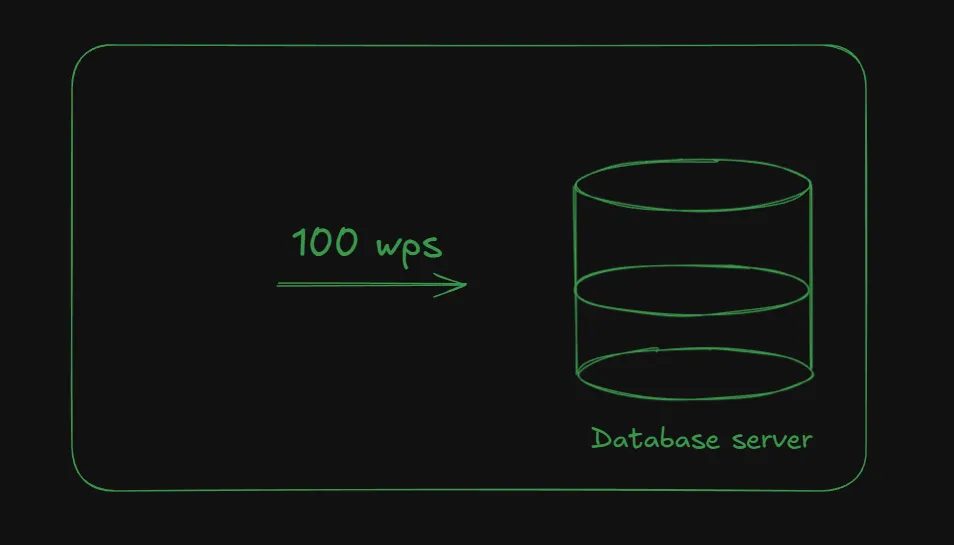
After a few months they notice that traffic has grown. Instead of 100 wps they are now receiving 500 wps. Queries become slow, users face difficulties using the app and the database CPU remains at peak usage most of the time.
To solve this, the company decides to increase the database capacity by buying more resources and hence vertical scale their database server. After the upgrade, everything is back to normal, and there are no performance spikes in the database.
The product continues to grow, traffic increases further. Now, instead of 500 wps, they start receiving 1000 wps. The company purchase the maximum database resources available and can handle the growing traffic smoothly.
One day, a content creator mentions the startup and its product, causing a sudden spike in traffic. Requests become slow, user experience downtimes and latency increases. At this point, the company has reached the maximum limit of vertical scaling and cannot scale further. Traffic now reaches 1500 wps.
With no other option and to handle the load, the company buys a new database server instance that can also handle 1000 wps and distributes the requests between the two servers.
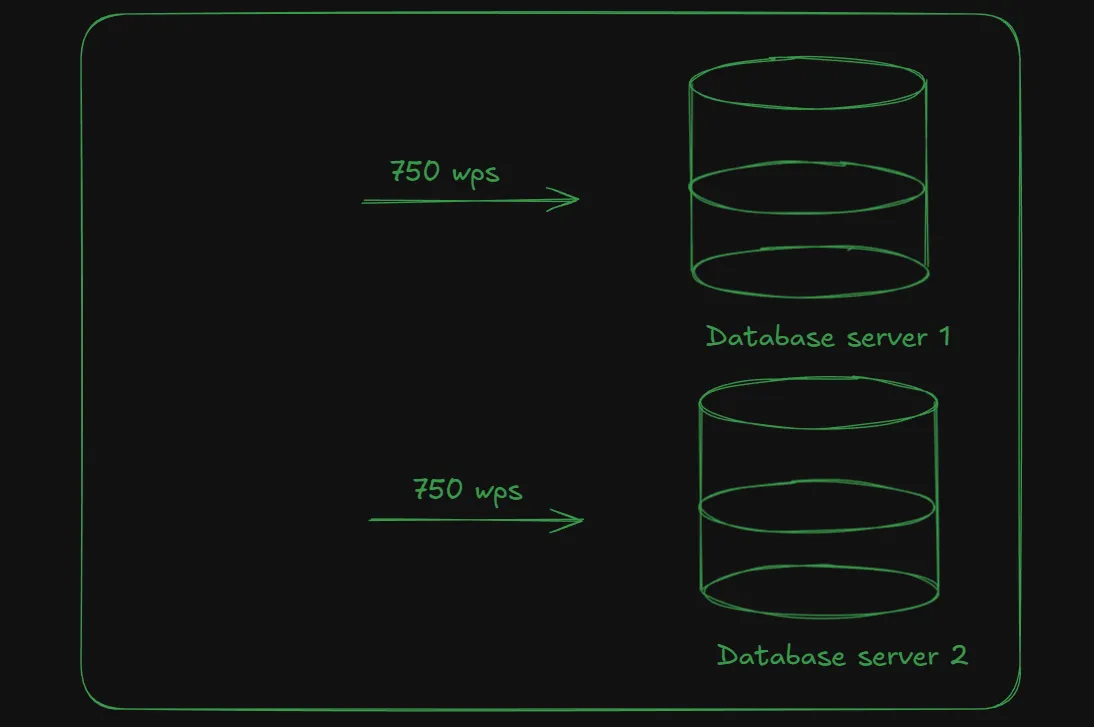
This allows the system to handle requests smoothly without latency or crashes. The company now also has the option to distribute the data between these two database instances.
If the data is distributed, then we can say that data is partitioned among the shards.
Therefore, from the above case study, partitioning is the distribution of the data either among different database instances or the same instance and operates at the data level.
We can also keep an exact copy of the data in the new database instance. This is known as a read replica which is only used for reads, while the primary database handles all writes and critical reads.
Sharding, on the other hand, is the distribution of a large database across multiple machines. These machines are refered to as shards and operates at the system level.
After a point where vertical scaling of database is no longer possible, we need to implement sharding. This is why sharding is also known as horizontal scaling of databases.
Conclusion
Why and when do companies feel the need to implement partitioning and sharding.
-
Partitioning operates at the data level and involves distributing of data.
-
Sharding operates at the system level and involves distributing of database across machines.
I hope this article helps you and makes the concept more clearer. You can also refer to the following ChatGPT blog to see this in production and how they handle tremendous traffic while relying on single PostgreSQL instance.
ChatGPT Blog: https://openai.com/index/scaling-postgresql/