1 min read
Concurrency and Parallelism
This one is the most confusing concept in computer science as there is only a very thin difference between them.
Concurrency
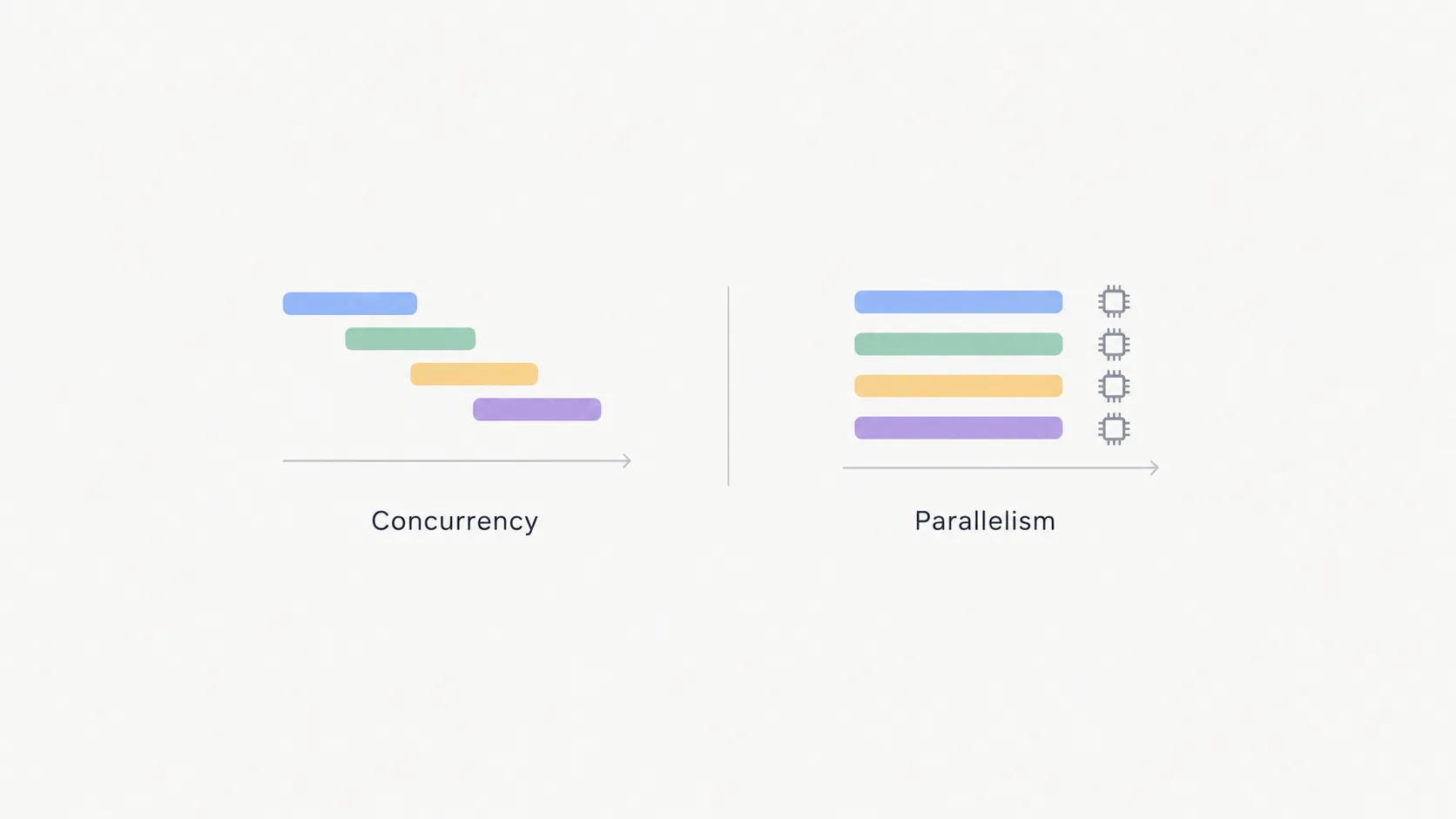
When a program handles multiple tasks in a manner that there is no order of execution or completion i.e it can jump from one task to other without even completing the one in-progress.
Example: There is one chef in a kitchen handling cooking multiple dishes at the same time. He might finish cooking dish A and then move to dish B, or cook half of dish A and then dish B or maybe switch between them at set interval of time.
Parallelism
When program processes multiple tasks at the same time or simultaneously, then we say parallelism is taking place.
Example: There are multiple chefs in the kitchen now. Each one is assigned to respective dishes and they cook them. There is no load of work on a single chef itself.
Which one is better
Which one is better and when to use what really depends on the usecase and there is no one correct answer to this.
Parallelism looks a much better solution as you may think there are multiple workers (cores) -> less time in completion. But at the same time it introduces complexity of implementation where you’ve to manage states and what not between these workers and keep them in sync
Concurrency is easier in implementation as it removes the overhead of synchronisation, but it raises the time of completion as the tasks have to wait until a single worker is attending someone else.